

MataRecycler is a smart recycling solution that combines automation, data analytics, and user-friendly design to optimize the recycling process. In a time when waste management is a major challenge in the United States, solutions like matarecycler are becoming increasingly important. Cities, businesses, and individuals are looking for better ways to recycle efficiently, reduce landfill waste, and support environmental sustainability.
Traditional recycling systems often struggle with contamination, low participation, and lack of transparency. MataRecycler addresses these problems by using modern technology to make recycling simpler, smarter, and more effective. Instead of relying only on human sorting and manual reporting, matarecycler brings intelligence into the process.
This article provides a deep, professional, and easy-to-read exploration of matarecycler. It explains what it is, how it works, why it matters, and how it can shape the future of recycling. The goal is not just to summarize existing ideas, but to offer analysis and insight that go beyond what is already available online.
What Is MataRecycler and Why It Matters
MataRecycler is best understood as an intelligent recycling system. It is designed to improve how recyclable materials are collected, sorted, tracked, and managed. By combining automation and data-driven insights, matarecycler helps reduce waste and increase recycling efficiency.
The importance of matarecycler comes from the growing waste problem in the US. Landfills are filling up, recycling rates remain inconsistent, and contamination reduces the value of recycled materials. MataRecycler aims to solve these issues by making recycling easier for users and more efficient for operators.
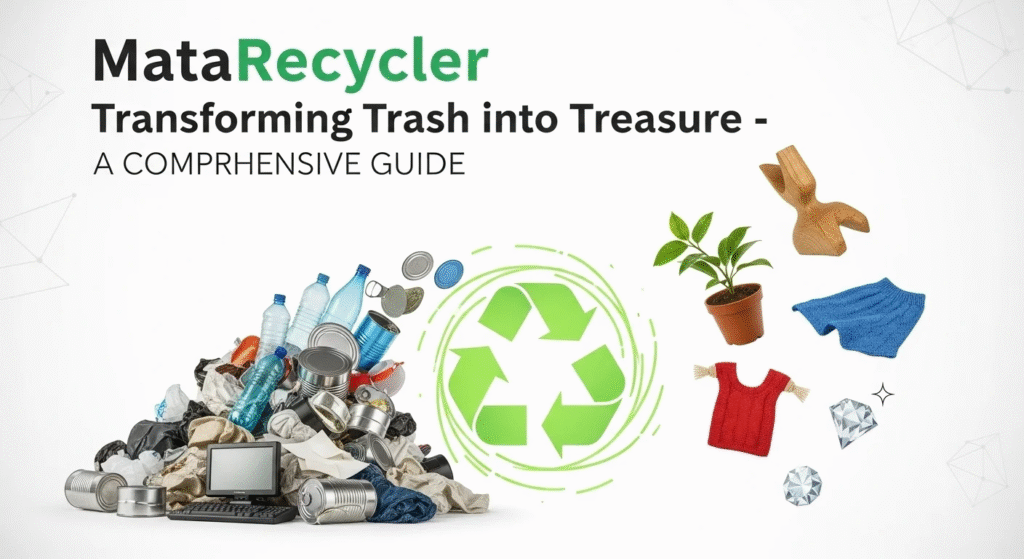
Unlike basic recycling bins, matarecycler systems are built to guide behavior. They help users recycle correctly and provide data that organizations can use to improve performance.
The Problem with Traditional Recycling Systems
To understand the value of matarecycler, it is important to understand the limitations of traditional recycling.
Also read:EO PIS: A Complete Guide to Executive Objectives and Performance Indicators
Many recycling programs fail because people are unsure what goes where. This leads to contamination, where non-recyclable items are mixed with recyclable ones. Contamination can cause entire batches of recycling to be rejected.
Another issue is lack of feedback. In most systems, users never know if their recycling efforts make a difference. Without feedback, motivation drops.
There is also limited data. Traditional recycling systems do not provide detailed information about usage patterns, material types, or efficiency. This makes improvement difficult.
MataRecycler was designed to address all of these problems in a practical way.
How MataRecycler Works
MataRecycler works by integrating smart technology into recycling infrastructure. At its core, it uses automated systems to identify, sort, and manage recyclable materials.
Sensors and scanners can help detect material types. Automated sorting reduces human error and improves speed. Data analytics track how much material is collected, how often bins are used, and where improvements are needed.
The system is designed to be user-friendly. Clear instructions and smart feedback help users place items in the correct location. Over time, this improves recycling habits.
MataRecycler does not replace human effort entirely. Instead, it supports workers by reducing manual sorting and providing better information.
Automation in MataRecycler
Automation is a key feature of matarecycler. Automated sorting systems can identify materials such as plastic, metal, or paper more accurately than manual methods alone.
This automation reduces contamination and increases the value of recycled materials. Clean, well-sorted materials are easier to process and sell.
Automation also improves safety. Workers are less exposed to sharp or hazardous items. This leads to better working conditions and lower risk.
By using automation, matarecycler brings consistency to recycling operations.
The Role of Data Analytics in MataRecycler
Data analytics is another major strength of matarecycler. Every interaction with the system can generate useful data.
This data helps operators understand usage patterns. For example, they can see which locations produce the most recyclable material or which materials are often misplaced.
Data analytics also support planning. Cities and organizations can adjust pickup schedules, bin placement, and education efforts based on real information.
Over time, this data-driven approach leads to continuous improvement in recycling performance.
User-Friendly Design and Behavior Change
Technology alone cannot solve recycling problems. Human behavior plays a major role. MataRecycler recognizes this and focuses on user-friendly design.
Clear labels, visual cues, and simple instructions help users recycle correctly. Some systems may provide immediate feedback, such as confirmation when an item is placed correctly.
This feedback builds confidence and reinforces good habits. When recycling feels easy and rewarding, participation increases.
MataRecycler’s design shows that sustainability solutions must consider human experience, not just technical performance.
MataRecycler in Urban Environments
Urban areas face unique recycling challenges. High population density, limited space, and diverse waste streams make recycling complex.
MataRecycler can be especially effective in cities. Smart bins can be placed in public areas, offices, and residential buildings. Data helps city planners understand where resources are needed most.
By improving efficiency, matarecycler can reduce collection costs and environmental impact. This supports cleaner, more sustainable cities.
MataRecycler for Businesses and Organizations
Businesses generate large amounts of waste, and many struggle to manage recycling effectively. MataRecycler offers a structured solution.
With data analytics, companies can track recycling performance and set measurable goals. This supports sustainability reporting and corporate responsibility initiatives.
Also read:Calamariere: A Complete Guide to History, Flavor, Culture, and Modern Culinary Art
Employees benefit from clear instructions and easy-to-use systems. This reduces confusion and improves participation.
For organizations that want to demonstrate environmental leadership, matarecycler provides both action and evidence.
Environmental Impact of MataRecycler
The environmental benefits of matarecycler are significant. By improving recycling rates and reducing contamination, it helps keep more materials out of landfills.
Recycling saves energy and reduces the need for raw material extraction. This lowers greenhouse gas emissions and conserves natural resources.
MataRecycler supports a circular economy, where materials are reused instead of discarded. This long-term approach is essential for environmental sustainability.
Economic Benefits of Smart Recycling
Sustainability and economics are closely linked. MataRecycler can reduce costs by improving efficiency and reducing waste.
Clean, well-sorted recyclables have higher market value. This can offset system costs over time.
Automation reduces labor-intensive tasks, allowing workers to focus on higher-value activities. Data-driven planning reduces unnecessary pickups and resource waste.
These economic benefits make matarecycler attractive not just for environmental reasons, but also for financial ones.
MataRecycler and Public Awareness
Public awareness is a key factor in recycling success. MataRecycler can support education by making recycling more visible and understandable.
Data from matarecycler systems can be shared with communities to show progress and impact. Seeing results builds trust and motivation.
Educational programs can use matarecycler data to target common mistakes and improve understanding.
This connection between technology and education strengthens long-term behavior change.
Scalability and Flexibility of MataRecycler
One of the strengths of matarecycler is scalability. The system can be adapted for small spaces or large networks.
A single building can use a basic setup, while a city can deploy a wide network of smart recycling units. The core principles remain the same.
This flexibility allows matarecycler to grow with demand. As needs change, systems can be upgraded or expanded.
Challenges in Implementing MataRecycler
While matarecycler offers many benefits, implementation requires planning. Initial costs may be higher than traditional bins.
Training is also important. Users and staff need to understand how the system works to get full value.
Data privacy and system maintenance are additional considerations. Clear policies and reliable support help address these challenges.
With proper planning, these challenges can be managed effectively.
MataRecycler and Policy Support
Government policies play an important role in recycling success. MataRecycler aligns well with sustainability goals and regulations.
Data from matarecycler can support compliance reporting and policy evaluation. This helps governments make informed decisions.
Incentives and partnerships can accelerate adoption and maximize impact.
Future Trends in Smart Recycling
Smart recycling is part of a broader trend toward intelligent infrastructure. MataRecycler represents this shift.
Also read:Kerkt: A Deep Exploration of Meaning, History, and Modern Relevance
In the future, systems may become even more accurate and integrated. Artificial intelligence could improve material recognition. Real-time data could support instant adjustments.
MataRecycler is well positioned to evolve with these trends, making it a future-ready solution.
Expert Insight on MataRecycler’s Strategic Value
From an expert perspective, matarecycler is not just a recycling tool. It is a system for managing resources intelligently.
Its strength lies in combining technology, data, and human-centered design. This integrated approach is essential for solving complex environmental problems.

Organizations that adopt matarecycler are investing in long-term sustainability and operational excellence.
MataRecycler and Community Engagement
Community involvement is critical for recycling success. MataRecycler can act as a focal point for engagement.
Community challenges, feedback programs, and shared goals can be built around data from matarecycler systems.
This sense of shared responsibility strengthens participation and trust.
Comparing MataRecycler to Traditional Recycling Solutions
Compared to traditional recycling bins, matarecycler offers clear advantages. It provides guidance, feedback, and data that basic systems lack.
Traditional bins rely heavily on user knowledge and motivation. MataRecycler supports users actively.
This difference leads to higher quality recycling and better outcomes.
MataRecycler and Long-Term Sustainability Goals
Sustainability is a long-term commitment. MataRecycler supports this by enabling continuous improvement.
Data-driven insights help organizations track progress and adjust strategies. This prevents stagnation and supports ongoing success.
MataRecycler aligns with broader environmental goals such as waste reduction and resource conservation.
Ethical and Responsible Use of Recycling Data
Data collection must be handled responsibly. MataRecycler systems should respect privacy and use data ethically.
Clear communication about data use builds trust. Responsible practices ensure long-term acceptance.
Ethical data use strengthens the credibility of smart recycling solutions.
Why MataRecycler Stands Out
MataRecycler stands out because it addresses both technical and human aspects of recycling. It does not assume perfect behavior. Instead, it supports learning and improvement.
Its combination of automation, analytics, and design creates a balanced solution. This balance is key to real-world success.
Conclusion: The Importance of MataRecycler in Modern Recycling
MataRecycler represents a meaningful step forward in recycling technology. By combining automation, data analytics, and user-friendly design, it addresses many of the weaknesses of traditional systems.
For the United States, where sustainability challenges are growing, matarecycler offers a practical and scalable solution. It supports environmental goals while delivering economic and operational benefits.
Understanding and adopting systems like matarecycler is essential for building a more sustainable future.
Frequently Asked Questions About MataRecycler
What makes matarecycler different from regular recycling bins?
MataRecycler uses smart technology, automation, and data to improve accuracy, efficiency, and user participation.
Is matarecycler suitable for small communities?
Yes, matarecycler can be scaled for small spaces as well as large cities.
Does matarecycler help reduce recycling contamination?
Yes, by guiding users and using automated sorting, matarecycler significantly reduces contamination.
Can matarecycler support sustainability reporting?
Yes, the data collected by matarecycler can be used for tracking progress and reporting.
Is matarecycler expensive to maintain?
Maintenance costs are balanced by long-term savings from improved efficiency and reduced waste.