

In today’s fast-paced world, individuals and teams constantly seek ways to learn faster, work smarter, and build meaningful relationships. One emerging approach that addresses these needs is “duaction.” Duaction is an interactive strategy that blends action with learning, enabling people to gain skills, improve collaboration, and boost productivity through real-time experiences.
Unlike traditional methods where learning and action are separate, duaction integrates both simultaneously. By doing and reflecting in real time, individuals and teams gain immediate insights, adapt quickly, and achieve better results. This article explores duaction in detail, providing original insights, practical applications, and tips for implementation.
What Is Duaction
The term duaction comes from combining “do” and “action.” It represents a mindset and methodology where learning occurs as people act. Duaction emphasizes purpose-driven action, real-time reflection, and collaborative learning. Rather than learning in isolation and applying knowledge later, duaction encourages continuous learning during the process of doing.
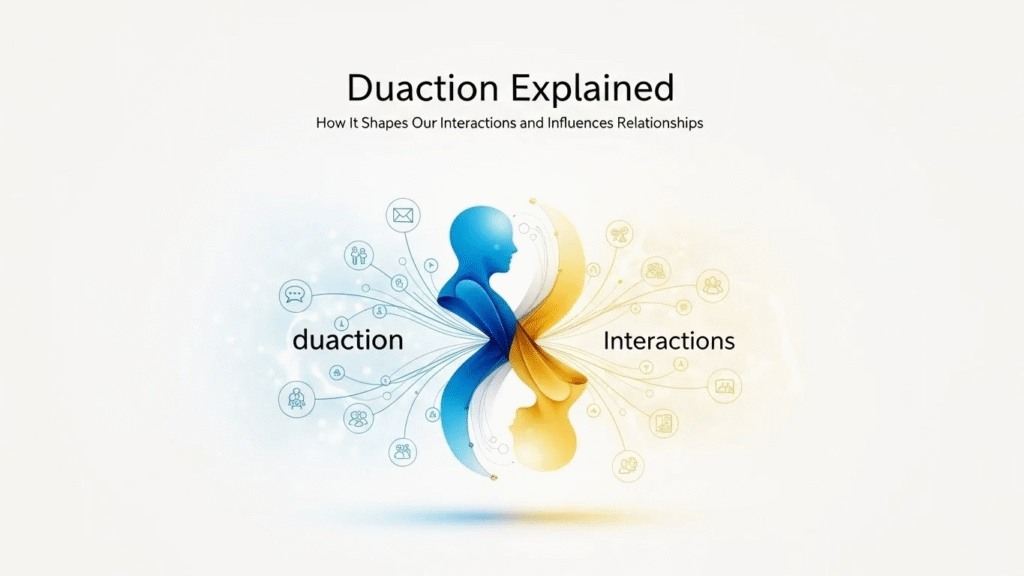
Duaction is grounded in the principle that experiences are the most effective teachers. When individuals act with awareness and purpose, they develop skills faster, improve decision-making, and enhance personal and team growth. The approach is widely applicable across workplaces, educational settings, personal development, and community activities.
The Importance of Duaction Today
Modern life demands adaptability, creativity, and collaboration. Workplaces are dynamic, learning is ongoing, and communication often occurs in diverse teams. Traditional approaches that separate planning, learning, and execution no longer meet these demands.
Also read:Masgonzola: The Creamy Italian Cheese Blend That Elevates Everyday Cooking
Duaction matters because it:
- Shortens the time between learning and application
- Encourages collaboration and teamwork
- Develops practical, real-world skills
- Strengthens relationships through shared experiences
By combining action with learning, duaction allows individuals and teams to respond to challenges effectively while continuously growing.
How Duaction Works
Duaction operates through a structured process that combines several elements:
Purposeful Action
Every activity in duaction begins with intentional action. The goal is not to act randomly but to perform tasks that have specific objectives, whether skill development, problem-solving, or team improvement.
Integrated Learning
Learning occurs simultaneously with action. Participants observe outcomes, reflect on progress, and adjust strategies in real time. This continuous learning cycle makes duaction highly effective.
Collaboration and Interaction
Duaction thrives in group settings, though it can also be applied individually. Working alongside others allows participants to share knowledge, provide feedback, and build trust through joint activities.
Reflection and Feedback
Reflection is integral to duaction. Individuals or teams regularly pause to consider what worked, what didn’t, and how to improve. Feedback can come from outcomes, peers, or self-assessment.
Immediate Adaptation
By combining action, learning, and reflection, duaction enables rapid adaptation. Participants quickly identify areas for improvement and modify approaches without waiting for external instruction.
Core Principles of Duaction
Duaction follows a set of core principles that guide its implementation:
- Intentional action: Every task serves a clear purpose.
- Continuous feedback: Learning occurs while doing, not afterward.
- Shared experience: Collaboration enhances understanding.
- Integrated reflection: Thinking critically is part of the action.
- Real-time adaptation: Changes are made immediately based on insights.
These principles ensure duaction remains a practical, actionable method that produces measurable results.
Duaction and Learning
Learning traditionally involves study, observation, and delayed practice. Duaction changes this by integrating learning with immediate action.
This approach aligns with experiential learning theories but goes further by emphasizing:
- Active participation
- Real-time reflection
- Collaborative experiences
For example, students in a duaction-focused program might complete a project, observe results, and adjust strategies as they go, all while learning critical skills like problem-solving and communication.
Duaction and Productivity
Productivity involves completing tasks efficiently while maintaining quality. Traditional productivity methods often separate planning from execution. Duaction improves productivity by:
- Turning every task into a learning opportunity
- Encouraging collaborative problem-solving
- Reducing errors through real-time adjustments
- Building skills while performing work
In this way, duaction does not just increase output but also enhances capability and confidence.
Duaction and Collaboration
Collaboration is essential in modern workplaces and communities. Duaction naturally strengthens collaboration because it emphasizes:
- Shared responsibility
- Real-time communication
- Collective learning and adaptation
Teams practicing duaction often develop stronger bonds, improved communication, and more cohesive problem-solving skills, making the approach valuable for any group environment.
Personal Growth Through Duaction
Duaction supports personal development by encouraging individuals to:
- Build confidence through active practice
- Enhance adaptability by learning from real-time feedback
- Improve emotional intelligence by reflecting on interactions
- Develop resilience by turning mistakes into learning opportunities
By integrating action with awareness, duaction fosters self-improvement and life-long learning.
How Duaction Differs from Other Approaches
Several methods aim to improve learning, productivity, and teamwork. Duaction stands out because it integrates action, learning, and collaboration in real-time.
- Duaction vs Traditional Learning: Traditional methods separate study and practice; duaction blends them.
- Duaction vs Coaching: Coaching focuses on guidance, often outside of real-time action; duaction emphasizes learning through doing.
- Duaction vs Productivity Systems: Tools like to-do lists focus on planning; duaction prioritizes learning during execution.
- Duaction vs Teamwork Models: Teamwork frameworks manage roles and communication; duaction enhances learning and adaptability through shared action.
This integration provides unique benefits that traditional approaches often miss.
Benefits of Duaction
Duaction offers numerous benefits for individuals and teams:

- Faster skill acquisition and learning
- Improved teamwork and communication
- Real-world adaptability and problem-solving
- Reduced fear of failure
- Continuous self-improvement
- Enhanced productivity without sacrificing learning
These advantages make duaction a versatile method suitable for education, work, and personal development.
Challenges of Duaction
While duaction is highly effective, it presents certain challenges:
- Requires mindfulness and focus during action
- Demands regular reflection, which can be time-consuming
- Collaboration needs strong communication skills
- Balancing planning with real-time execution may be difficult
- Complex tasks may need more initial structure
Awareness of these challenges helps users implement duaction successfully.
Step-by-Step Guide to Duaction
Here is a practical approach to applying duaction:
- Set clear intentions for action and learning
- Begin action with awareness of outcomes
- Observe and reflect on progress during the activity
- Make immediate adjustments based on insights
- Share experiences and feedback with others
- Plan next steps using insights gained
- Repeat the cycle for continuous improvement
This structured approach ensures duaction becomes an ongoing habit rather than a one-time experiment.
Real-World Applications of Duaction
Duaction can be applied in multiple contexts:
- Education: Students complete projects while learning practical skills
- Workplace: Teams use duaction for problem-solving and performance improvement
- Community: Groups collaborate on projects, learning from shared experiences
- Personal Life: Individuals apply duaction in hobbies, fitness, or self-improvement routines
Its adaptability makes duaction relevant for nearly any situation requiring learning or collaboration.
Also read:BK Horse: Meaning, Color Genetics, History, Care, Value, and Modern Importance Explained
Tools Supporting Duaction
Certain tools can facilitate duaction without replacing its core principles:
- Collaborative platforms like shared digital boards
- Feedback and reflection prompts
- Simple tracking methods for progress and lessons learned
These tools enhance the duaction experience without compromising its interactive nature.
Measuring Success in Duaction
Success in duaction is broader than task completion. Indicators include:
- Improved skills and knowledge
- Enhanced teamwork and communication
- Faster adaptation to challenges
- Positive reflection and feedback cycles
- Overall satisfaction with learning and action outcomes
These measures highlight the depth of duaction’s value.
Integrating Duaction into Daily Life
To practice duaction regularly:
- Begin each activity with intention
- Reflect during and after tasks
- Collaborate when possible
- Use mistakes as learning opportunities
- Keep cycles of action and reflection consistent
Small daily habits reinforce the duaction mindset over time.
Common Myths About Duaction
Myth: Duaction is just a productivity hack
Reality: Duaction is a mindset that integrates learning, action, and collaboration.
Myth: Duaction means acting without planning
Reality: Duaction includes intentional planning aligned with action.
Myth: Duaction only works in teams
Reality: Individuals can apply duaction in personal growth and skill development.
Duaction and Emotional Intelligence
Duaction enhances emotional intelligence by encouraging awareness of:
- Personal emotions during action
- Reactions to challenges
- Interactions with others in collaborative settings
This reflection builds stronger self-awareness, empathy, and communication skills.
Duaction and Leadership
Leaders using duaction foster environments where:
- Team members learn through action
- Feedback is shared openly
- Experimentation is encouraged
- Continuous growth is prioritized
Duaction helps leaders model adaptive, collaborative, and learning-focused behaviors.
Duaction in the Digital Age
Digital tools expand duaction’s possibilities:
- Remote collaboration platforms allow shared action
- Live feedback loops replicate in-person interactions
- Online learning environments integrate duaction for virtual skill development
Digital duaction ensures the approach remains effective in modern, tech-driven environments.
Future of Duaction
Duaction is poised to grow as workplaces, education, and personal development embrace experiential learning. Future developments may include:
- Structured duaction frameworks in schools and workplaces
- Software tools supporting real-time action and reflection
- Research on outcomes and best practices
- Integration into organizational culture for continuous improvement
The approach will likely become mainstream as demand for adaptable, interactive learning grows.
Practical Tips to Start Duaction
- Begin with a small, achievable goal
- Set clear intentions before acting
- Observe outcomes and reflect
- Invite collaboration when possible
- Repeat cycles consistently for growth
Starting small ensures duaction is manageable and effective.
Related Terms Connected to Duaction
- Experiential learning: Learning through real-world experiences
- Active learning: Engaging directly with tasks rather than passive observation
- Collaborative learning: Shared knowledge-building with others
- Iterative practice: Repeating cycles of action, reflection, and adjustment
Understanding these concepts helps contextualize duaction and its applications.
Frequently Asked Questions About Duaction
What is the main purpose of duaction?
Duaction aims to integrate action and learning so individuals and teams can improve skills, productivity, and collaboration in real-time.
Can duaction be applied individually?
Yes, individuals can practice duaction to enhance personal skills, learning, and growth.
How does duaction improve team performance?
By promoting shared action, reflection, and feedback, duaction strengthens communication, collaboration, and problem-solving.
What skills can duaction develop?
Duaction enhances adaptability, critical thinking, emotional intelligence, teamwork, productivity, and leadership skills.
Does duaction require special tools?
No special tools are required, but collaboration platforms, reflection prompts, and tracking methods can support the process.
Conclusion
Duaction is an innovative approach that blends action, learning, collaboration, and reflection into a single, powerful methodology. By practicing duaction, individuals and teams develop skills faster, improve communication, adapt more effectively, and achieve meaningful results.
Whether applied in education, workplace, personal growth, or community projects, duaction offers a practical, flexible, and growth-oriented framework. Its integration of doing and learning ensures that growth happens naturally, continuously, and in alignment with real-life experiences.
For those seeking a productive, collaborative, and adaptive way to learn and achieve goals, duaction offers a transformative path forward.